

The Observation
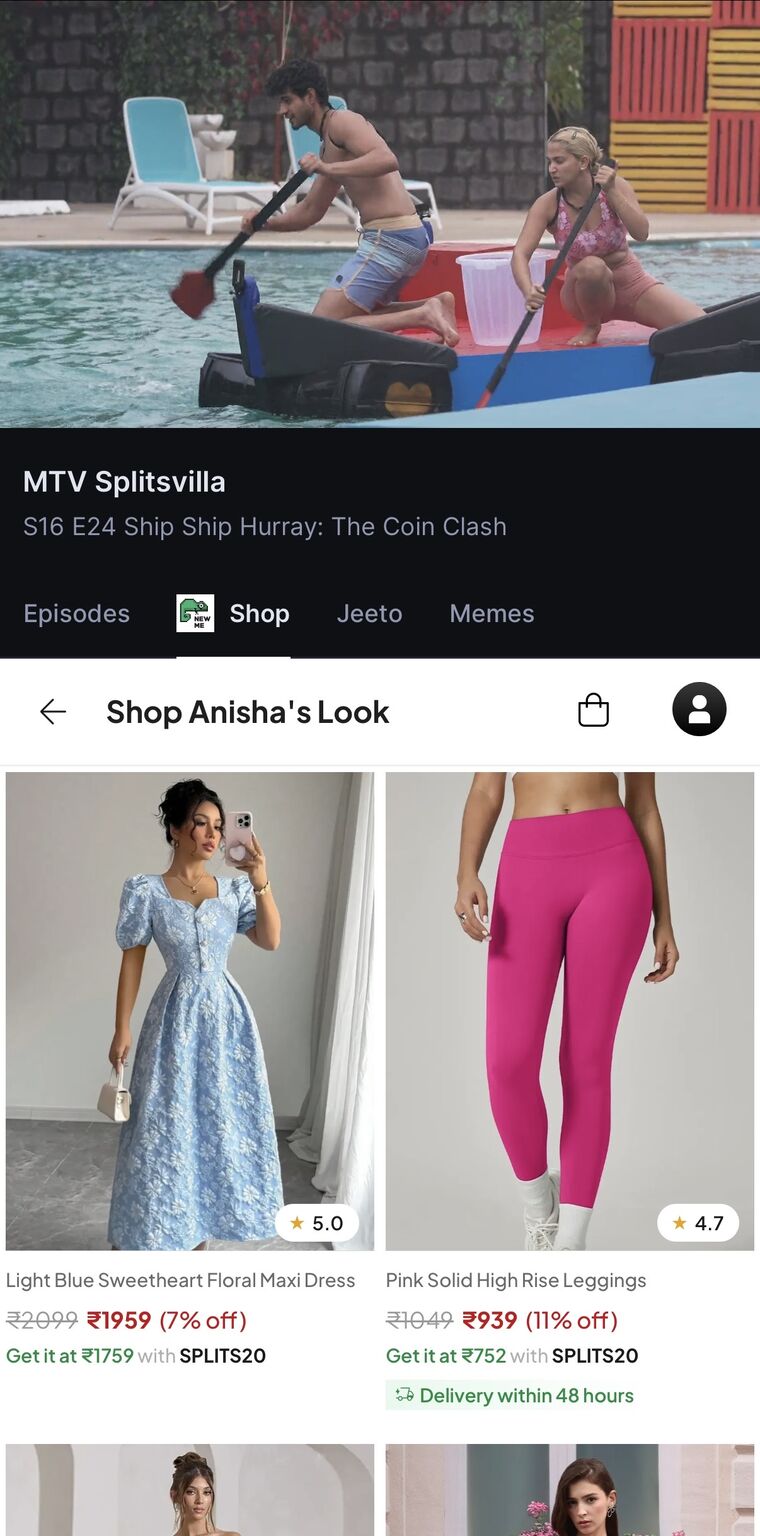
While watching the T20 World Cup on JioHotstar — India vs West Indies — the innings break hit. Switching to MTV Splitsvilla during the gap revealed something unexpected:
Tap on the outfit → See similar styles → Buy directly. All without leaving the stream.
JioHotstar had quietly launched an in-stream shopping experience powered by NEWME — allowing viewers to shop contestant outfits in real-time during a reality show broadcast.
The Insight
This isn't just a feature launch. It's OTT activating its engagement flywheel as a revenue engine.
JioHotstar already sits on massive daily engagement — cricket, reality shows, movies, binge culture. The attention problem is solved. Emotional moments are constant. What they've done is simply reduce friction between:
Emotion → Intent → Transaction.
Instead of random banner ads or interruptive pre-rolls, this is contextual commerce. When someone likes what a contestant is wearing, that buying intent already exists. The product just removes the gap between wanting and buying.
The Problem
OTT platforms have traditionally relied on two monetization models: subscription revenue and advertising. Both have ceilings:
- Subscriptions face churn pressure and price sensitivity in emerging markets
- Advertising is interruptive by nature — it breaks immersion and drives ad fatigue
- Brand integrations feel forced and rarely convert at the point of intent
Core Friction: OTT platforms generate enormous attention and emotional engagement, but lack a native commerce layer that converts viewer interest into transactions without disrupting the viewing experience.
The Concept
In-Stream Contextual Commerce — The Three-Way Value Loop
JioHotstar × NEWME has created a model where three stakeholders win simultaneously:
- For brands (NEWME): This beats interruptive ads. The product is embedded in a moment of genuine interest — not shoehorned into a pre-roll slot. Discovery and conversion happen in a single loop.
- For the platform (JioHotstar): This opens a new monetization layer without disturbing content. No ad-break fatigue, no subscription friction — just commerce layered on top of engagement they already own.
- For users: Instead of context-switching between an OTT app, a browser, and a shopping app — the entire flow collapses into a 2-tap interaction. See it, like it, buy it.
The economic model is elegant: passive viewing is slowly becoming interactive behavior. And interactive behavior compounds revenue because every session becomes a potential transaction surface.
Expected Impact
This pattern has multi-layered implications for the OTT and commerce ecosystem:
- Higher engagement-per-session → viewers interact with content beyond passive consumption
- New revenue stream → commerce GMV layered on top of existing ad and subscription revenue
- Better brand ROI → contextual placement converts better than interruptive ads (higher intent signal)
- Stickier content formats → reality shows, fashion content, and lifestyle programming become shoppable inventory
- Platform moat → brands will prefer platforms that offer native commerce integration over traditional ad slots
If even 2–5% of viewers in a reality show session interact with the shopping overlay, that's a massive funnel given JioHotstar's scale of concurrent viewers during prime content.
The Takeaway
This is what happens when content platforms stop thinking like broadcasters and start thinking like ecosystems.
JioHotstar isn't just streaming content anymore — it's building a commerce-aware content platform where every frame of engaging content is a potential storefront. The shift from passive viewing to interactive behavior is subtle but compounding.
For product thinkers, the lesson is clear: attention is the most expensive asset in digital products. If you already own it, the smartest strategy isn't to sell it to advertisers — it's to build native transaction surfaces that convert intent where it naturally forms.